
Facilities maintenance in a hospital and nursing home is a job that often happens behind the scenes, but it plays a critical role in patient care and daily operations. At Perham Health and Perham Living, facilities maintenance lead Ed Melo helps oversee the systems and infrastructure that keep the buildings functioning safely and comfortably for patients, residents, visitors, and staff.
Meet Ed Melo, facilities maintenance lead
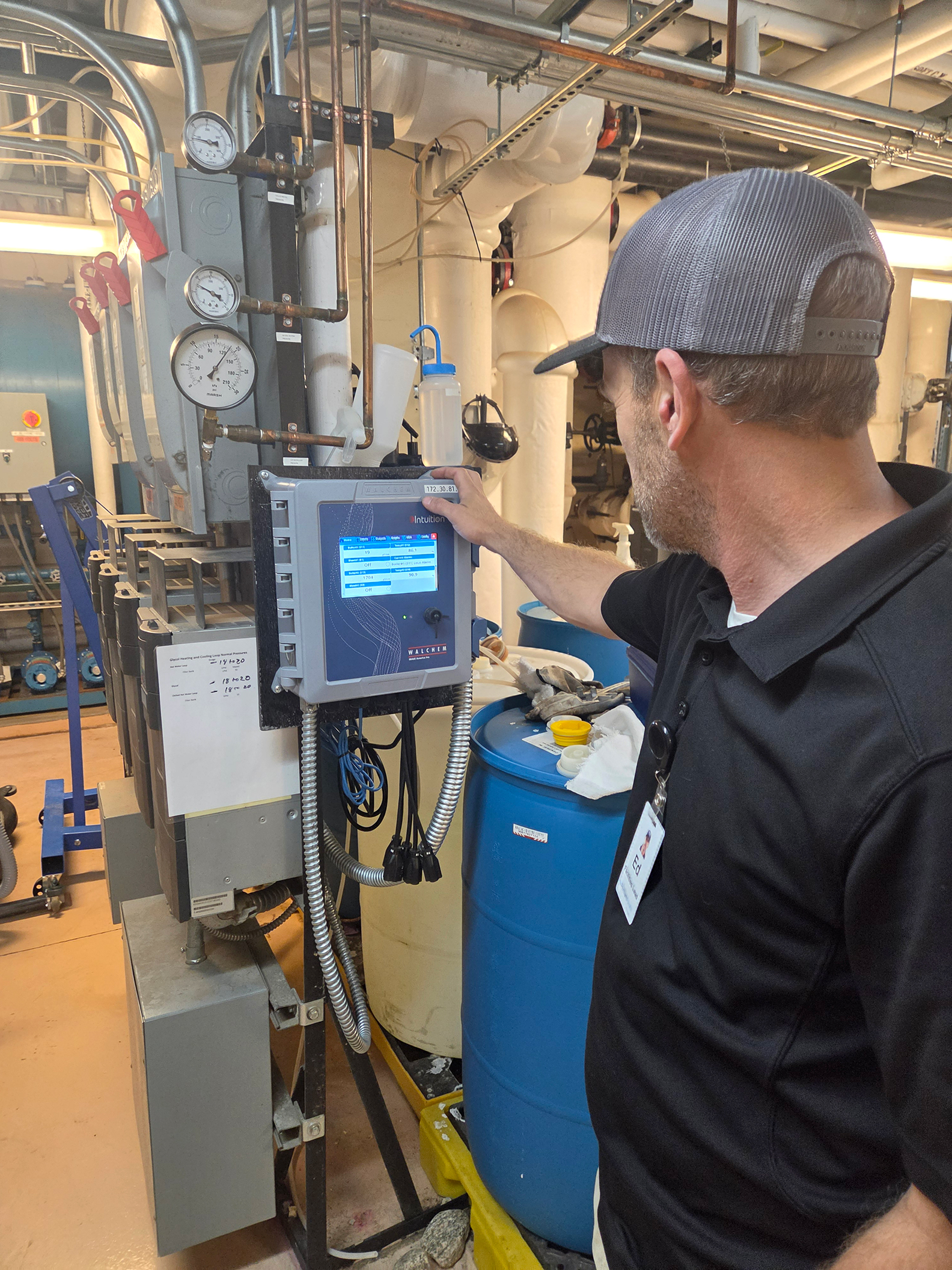 Ed Melo, the facilities maintenance lead for both Perham Health and Perham Living, has spent the last six years keeping both organizations humming along.
“I oversee day-to-day operations of both facilities at Perham Health and Perham Living,” Ed explains. “It’s kind of controlled chaos at times. You never know what’s going to happen when you’re taking care of 500,000 square feet of buildings.”
What got him interested in the job?
Before coming to Perham Health, he spent most of his career in carpentry and construction. When an opportunity opened at Perham Health, he decided it would be a good change of pace from construction work.
“I love construction,” he says. “But at the end of the day, when hopefully I’m old enough to retire, my body will still be working. It’s way more of a mental challenge here.”
Facilities maintenance in a healthcare setting involves much more than simple repairs. Ed and his teammates are responsible for keeping critical systems operating around the clock. That includes boilers, heating and cooling systems, automatic doors, fire systems, generators, medical air systems, and countless other pieces of equipment throughout the buildings.
What’s a typical day like?
Every day begins with planning. “You try making a plan,” Ed says with a laugh, “but sometimes the unexpected happens.”
The unpredictability is part of the job. One day may involve an air handler failure. Another could bring a leaking pipe in the operating room or a malfunctioning automatic door. The maintenance department’s role is to troubleshoot problems quickly while keeping the hospital and nursing home running safely.
“There’s always something breaking,” he says “You’re trying to keep everybody comfortable in the building and safe with over 700 thermostats to keep an eye on.”
Ed is part of a larger maintenance team that includes more than ten employees. While everyone shares responsibilities, Ed also carries a boiler license, which requires specialized training and testing. Since coming to Perham Health, he has completed boiler training and passed three licensing exams.
Beyond mechanical systems, facilities staff also handle compliance and regulatory requirements. Ed describes himself as becoming “more of a pencil pusher” as his responsibilities have grown. Much of his work now includes maintaining logs, organizing documentation, and preparing for inspections from organizations like The Joint Commission and the Department of Health.
Best part of his job?
“One of the cool things about working here is I learn something new every day,” Ed says. “There’s a lot of infrastructure into a hospital.”
He especially enjoys the variety that comes with the work.
“I’ve never been very good at trying to pick one thing and specialize in it,” he says. “This seems to be a good fit for a guy like me.”
He also likes being inside. “It’s nice working in air conditioning and a climate-controlled environment, rather than doing construction work when it’s twenty below, standing on top of a wall waiting for a rafter,” he says with a laugh.
What makes his job challenging?
“I thought I was pretty smart coming here,” he admits. “Being in construction my whole life, I thought I was pretty handy until I stepped into a hospital and realized I don’t know very much.”
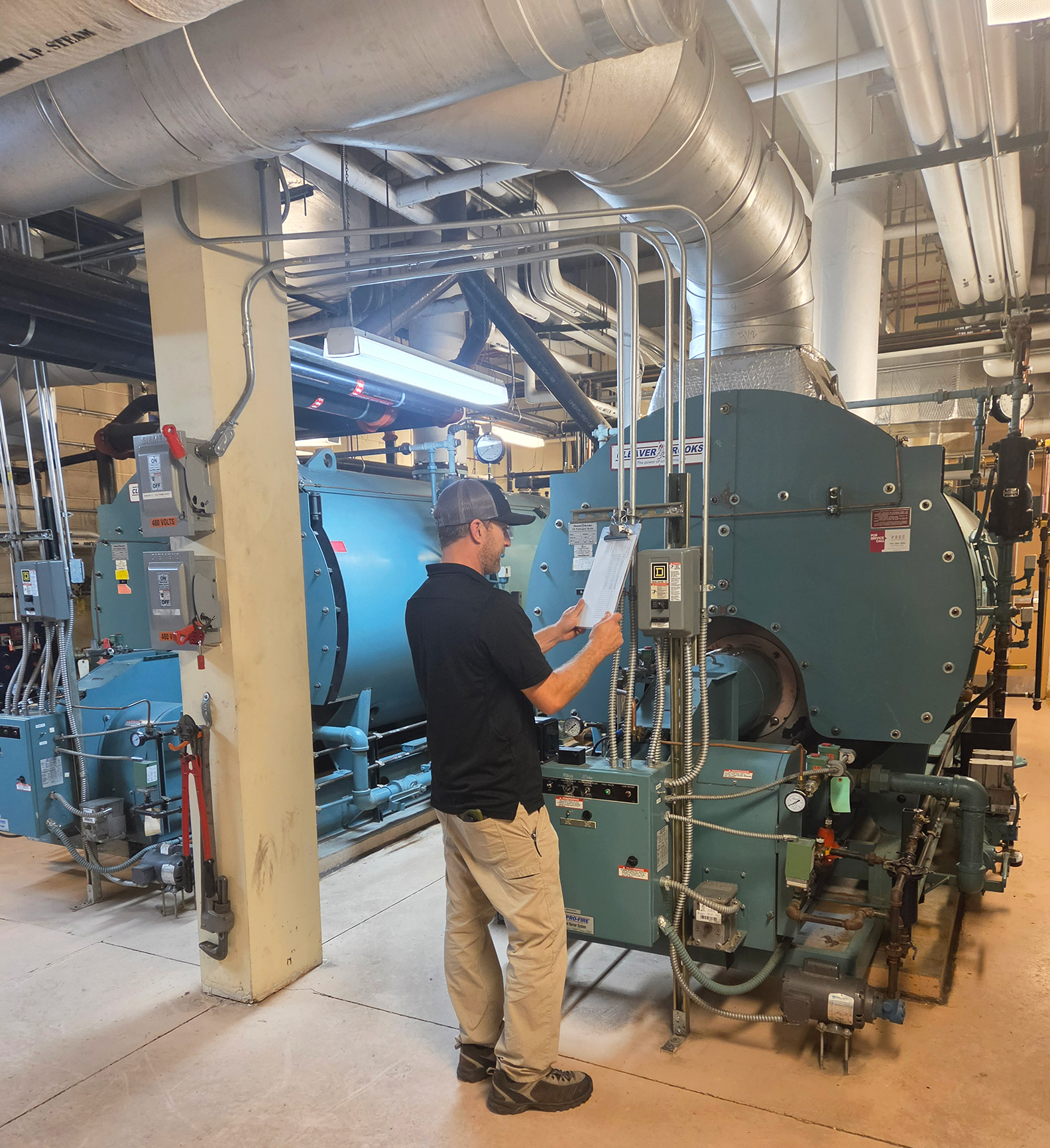 He said healthcare facilities are far more complex than most people realize. Even systems that seem straightforward often involve layers of infrastructure and safety requirements.
“We have a job that never ends,” he says. “It will never get caught up, and it’s never completed.”
One of the most challenging parts of the job, according to Ed, is keeping automatic doors functioning properly. Hospital doors are tied into multiple safety and security systems, making them surprisingly complex to troubleshoot.
“When one of those doesn’t work, it’s a pain in the butt,” he says. “It really disrupts the flow of the hospital.”
What does he wish people knew about being a facilities maintenance lead?
The job carries significant responsibility. Boilers and other mechanical systems must be monitored carefully, and maintenance staff rotate on-call responsibilities throughout the year. Emergencies can happen at any time.
“The boiler room is the room nobody really ever thinks about,” he says “but it’s kind of the heart and soul of the whole hospital. The way I like to think about it is the building is our biggest patient that you’ve got to keep working. Without it nothing else goes.”
What he likes about working for Perham Health
Despite the challenges, Ed said he enjoys working at Perham Health and Perham Living because of the atmosphere and the people.
“I work with great guys,” he says. “I wake up and I enjoy coming to work.”
He also values knowing that his work contributes to patient care, even if he is not directly involved with patients.
“Whatever I do will absolutely affect what’s going on out in the hospital,” he says. “I feel like I’m impacting lives for sure.”
What advice does he have for someone considering a career in facilities maintenance?
The work is ideal for someone who has a positive attitude, willingness to work hard, and enjoys variety and problem-solving.
“If you like a lot of variety, you like a fast-paced job, it’s a good job,” he says. “You just got to learn to deal with a little bit of stress.”

Perham Health Public Relations
Our content is for informational purposes only and should not be relied upon as medical advice. The content is not designed to replace a physician’s medical assessment and medical judgment. As always, please consult first with your physician about health matters.


Leave A Comment