
Diagnostic imaging plays a vital yet often unseen role in healthcare. While patients may interact most with their healthcare providers, it’s the imaging teams—working behind the scenes—who capture the detailed scans such as x-rays, CT scans, MRI scans, and mammograms that guide treatment decisions, detect health issues, and provide clarity in moments of uncertainty.
Meet Cintia Rico, Radiologic Technologist, R.T.(R)(M)(CT)(MR)(ARRT)
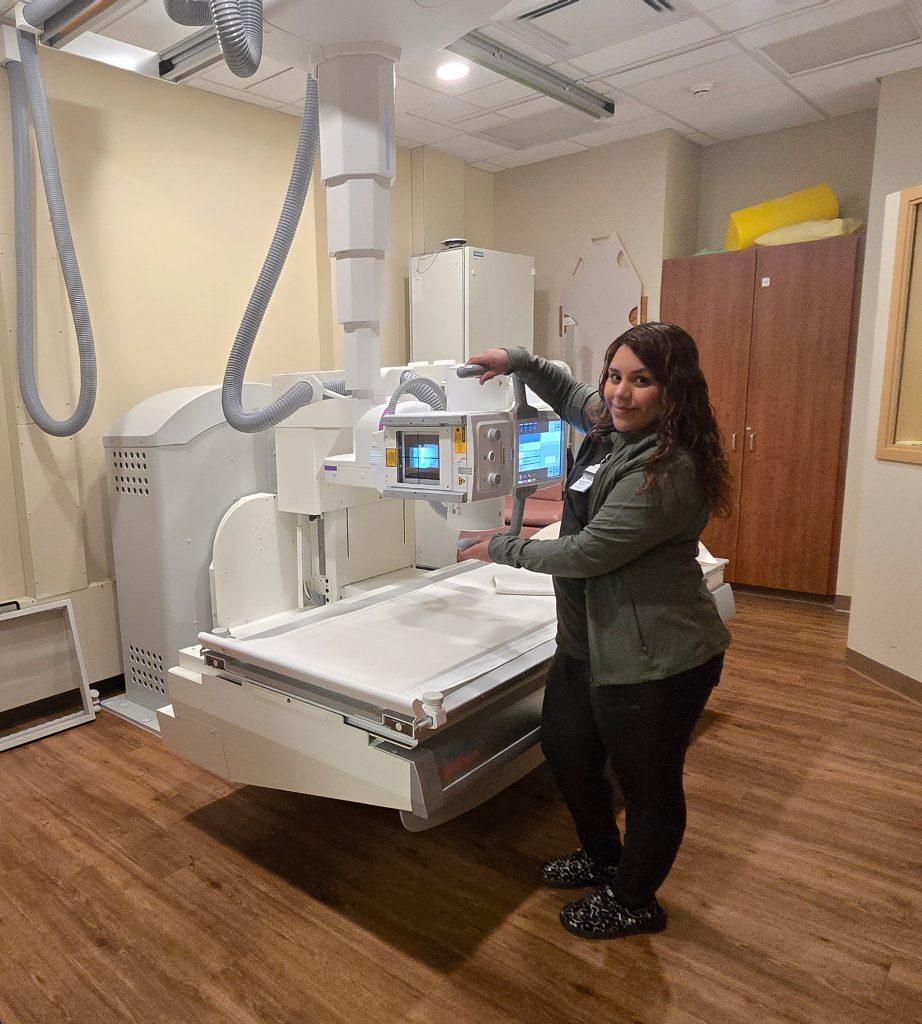
As a radiologic technologist, Cintia Rico performs medical imaging that is used to help diagnose and treat illnesses and injuries. She performs x-rays, CT scans, MRI scans, and mammograms for scheduled tests, emergencies and surgery. 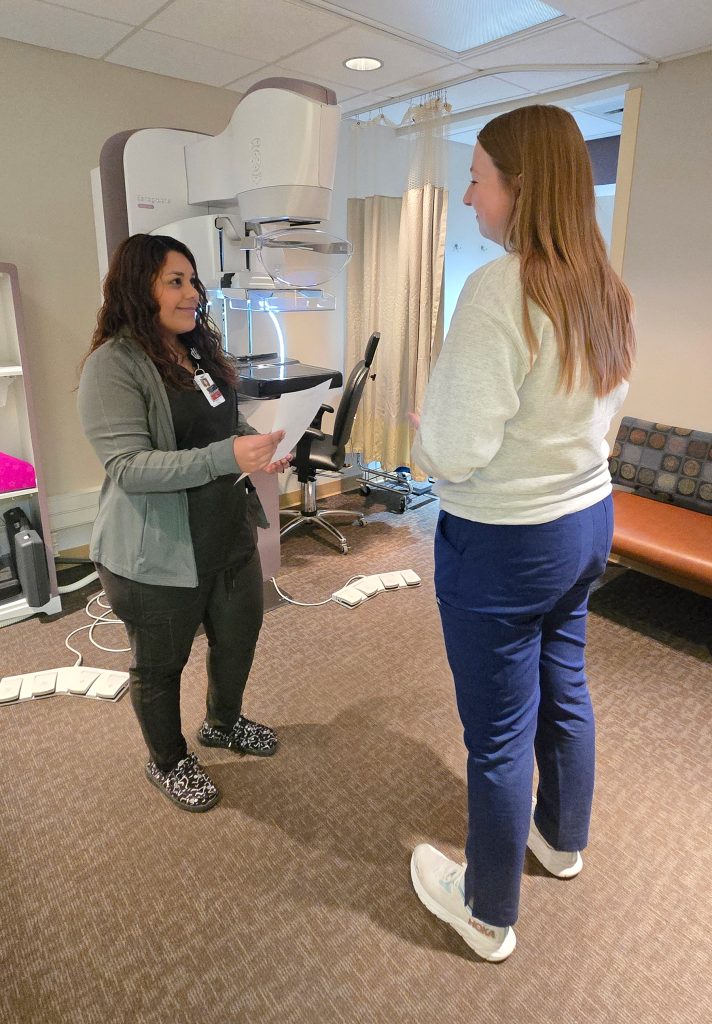
What’s a typical day like?
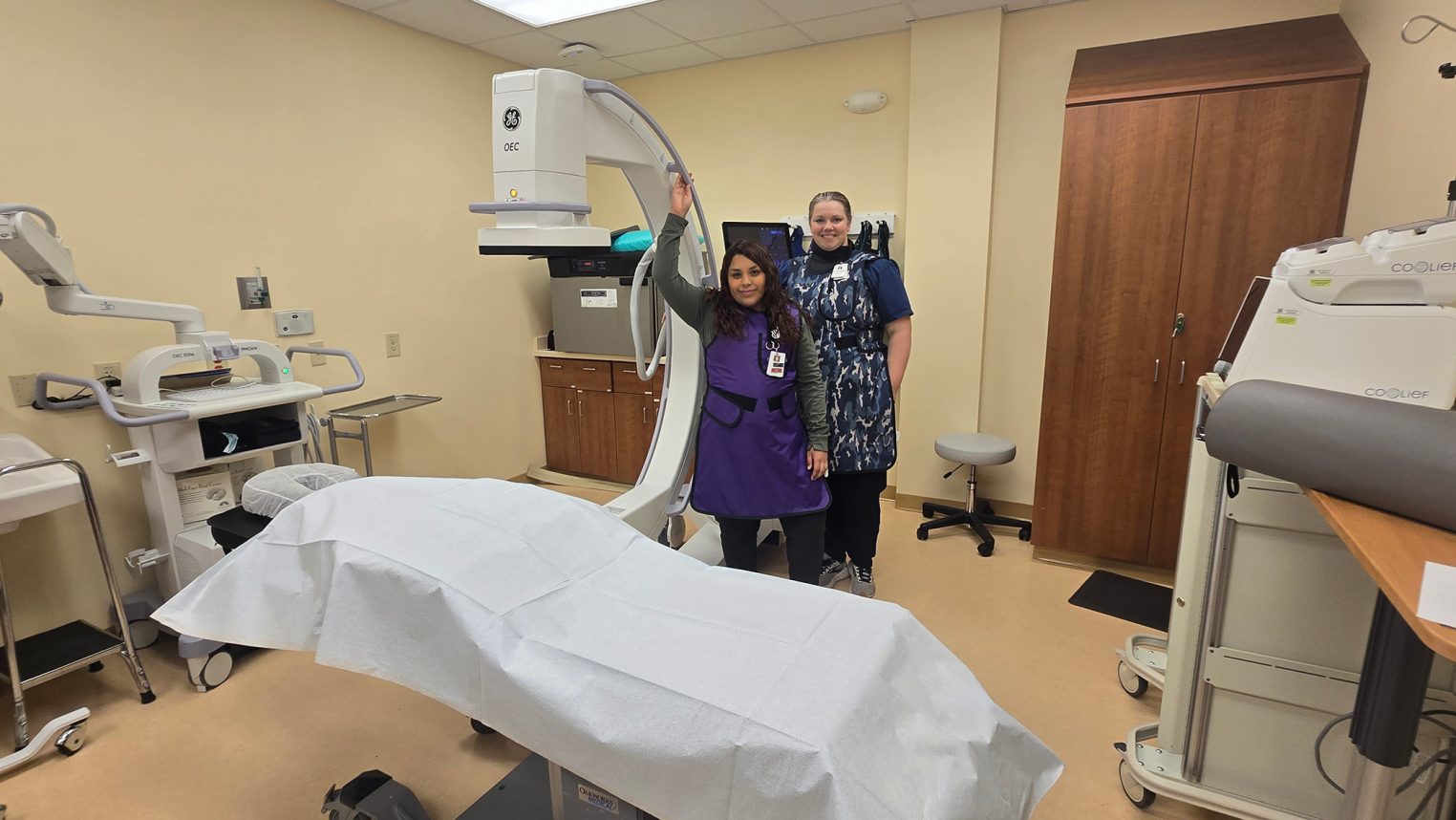
For Cintia, every day is different. “We do several different areas of radiologic imaging throughout the day. I can go from doing a portable chest x-ray in the emergency room to an x-ray in the operating room. We do scheduled CT scans to critical scans. With the new pain management clinic, I use x-ray to help guide the provider to pinpoint where to do the injection, so the patient gets the best pain relief. I also work with our radiologist on procedure days to do swallow studies with speech therapy and breast imaging with ultrasound,” she explains.
Some days, Cintia can be found in surgery using x-rays to help the doctor place a port or make sure clips or screws are placed properly. The imaging helps the doctor see what is going on up close.
Every day involves strong communication and collaboration with nurses and physicians to provide timely and accurate imaging for our patients.
Best part of her job?
She likes the fast pace of the job and that every day is different. “I take it as a challenge to get the best images possible for the patient. Not every patient is the same, everybody’s anatomy is different. It’s very rewarding to be a part of helping patients get their answers as to what is wrong,” Cintia says.
“I like to ease patients’ anxiety about getting an exam by explaining every step so that they feel more comfortable and we get the best images,” she says. “I especially like when I can ease a cancer patient’s anxiety by squeezing them in. They are so grateful that they don’t have to come back another day or drive to Fargo,” she recalls.
 What makes her job challenging?
The job is both technically and emotionally challenging because it requires precise skills as well as compassion for patients. “We understand the anatomy, the positioning, the radiation safety part of our job, but we also must have compassion. Some patients are in pain, are anxious, have dementia or other conditions that make it difficult for them to fully cooperate. It takes knowledge and empathy for us to do the exam and get the best images to diagnose this person. A lot of stuff we do is under pressure like trauma or stroke codes and we need to keep our composure,” explains Cintia.
What got her interested in being a radiologic technologist?
“When I was working at Perham Living, I knew I wanted to go back to school, but I was thinking about speech therapy. However, when I was doing my research on speech, I came across radiology. I looked into it and liked the ability to learn the different modalities like mammography, MRI, or CT. I saw that the nearest program was in Detroit Lakes which is so close,” recalls Cintia.
What kind of training is needed to be a radiologic technologist?
Becoming a radiologic technologist is two years for an associate degree or four years for a bachelor’s degree with both class work and clinicals.
“I did a year of classroom work and then a full year of clinicals where I went to different facilities and did my training right along with their Rad Tech. They showed us different ways of getting an image because you can’t always go by textbook. The patient might be in pain or can’t move a certain way, so we have to come up with different ways of doing the same image. I got to do a few of my clinicals at Perham Health,” explains Cintia.
“Once you are on the job, you can earn different credentials like mammography, MRI, CT, or DEXA without the need to go back to school. Most facilities help cover the cost of the materials needed to get certified on a new modality,” she explains.
What advice does she have for someone interested in being a radiologic technologist? 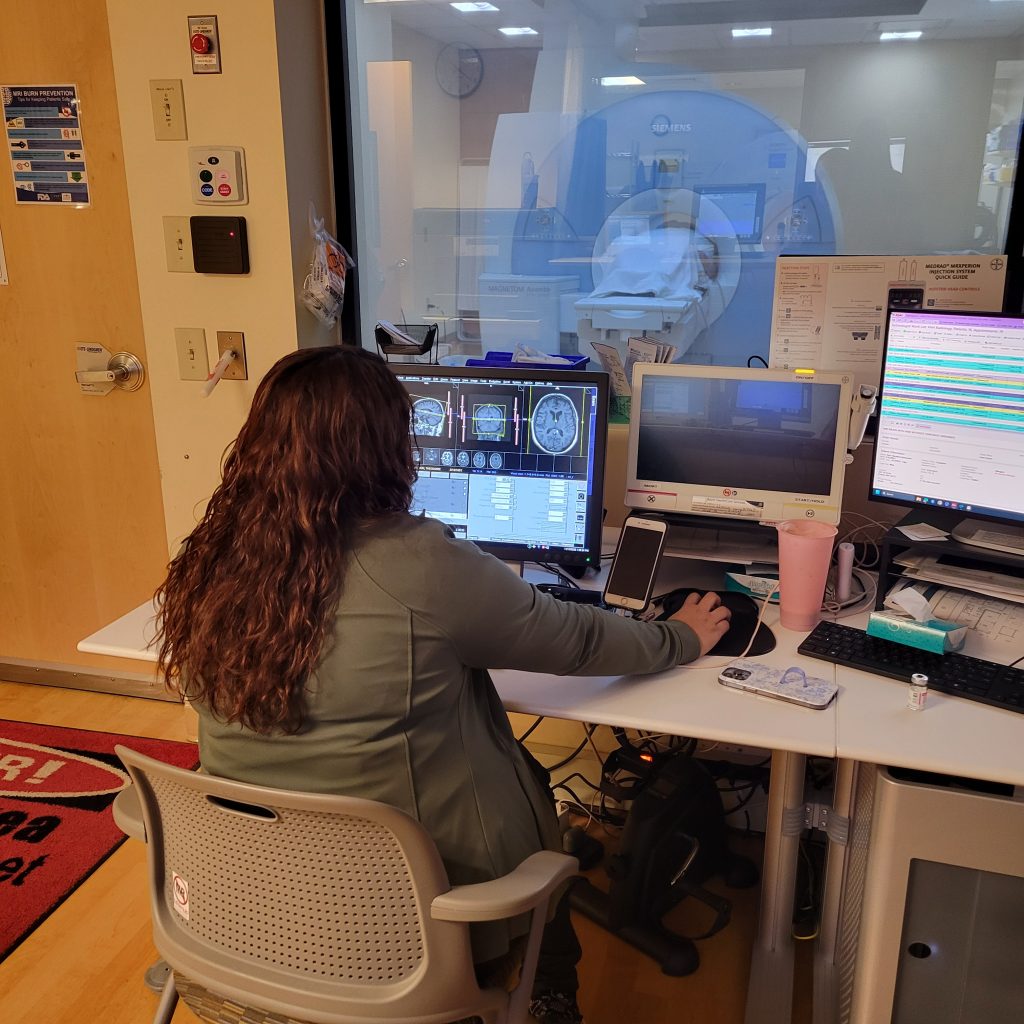
“Job shadowing is a great way to experience the job to see if it’s something you would like to pursue. It’s a great career choice if you are seeking stable, in-demand healthcare jobs,” she adds.
What does she wish people knew about being a radiologic technologist?
<p>“What I wish people knew is that we are basically the eyes of medicine because our imaging helps the provider see what’s going on inside the body so that the patient can get treated correctly,” she says proudly.
What does she like about working for Perham Health?<
/strong>Cintia likes that Perham Health and Perham Living are flexible and offer opportunities to grow. “I was able to keep working at Perham Living while I went to school to be a radiologic technologist. It also helped me get my job at Perham Health down the road. There’s also room for growth. Everybody gets trained in CT scans. Then, depending on who wants to cross train in other modalities, some people do mammograms, some do MRI while others do DEXA scans,” Cintia says.
 “I like that we provide a lot of services compared to other small hospitals. We just keep growing. Perham is a great community, and it’s nice that Perham Health participates in anything when it comes to the community,” she says proudly.
“The best part of my job is my coworkers,” she says without hesitation. “We are friends and so comfortable with each other because we spend so much time together. We are very team driven here and keep each other afloat on the busiest days. A lot of us are ready to jump in and help each other out, starting IVs, helping transfer patients, and bringing them back to their room. Teamwork is really the heart of what we do,” she says with a smile.

Perham Health Public Relations
About Perham Health
Perham Health is a 25-bed Critical Access Hospital with three primary care clinics, a 96-bed nursing home, home health care agency, adult day services, memory care assisted living, and senior housing. The medical staff consists of 24 physicians, a nurse midwife, 14 advance practice clinicians, and three chiropractors. Visit perhamhealth.org to learn more.
Our content is for informational purposes only and should not be relied upon as medical advice. The content is not designed to replace a physician’s medical assessment and medical judgment. As always, please consult first with your physician about health matters.


Leave A Comment