
Living in the land of 10,000 lakes is undoubtedly a paradise for the fisherman or woman. However, a fishhook injury is certainly not paradise. While fishhook injuries are not ideal, Perham Health is here to assist. Jen Gietzen, RN, emergency department director at Perham Health, gives her insight on what to do and expect if a fishhook injury occurs.

2019 Fish Hook Removal Tracking
Most patients that come into the emergency department for fishhook removal are male. As far as age goes, a quick review this year shows that most patients are in their 40s to 60s.
Scenarios
We often see fishhooks in the hands or fingers, but we have dealt with many scenarios that are more complicated. Sometimes treble hooks, which have three main points, cause patients to have multiple embedded angles, which is never fun.
Worst-case scenario, you have a hook that embeds in your face, such as near or in your eye. Please do not attempt to remove it. We will examine you, assess for vision concerns, and make the appropriate referrals for safe removal.
When to go to the emergency department
We are willing to see anyone having difficulty removing the fishhook themselves. It can get tricky with the treble hooks especially, so do not hesitate to come to see us when needed. Fun fact – we will supply you with a new fishing lure as you depart to replace your old one!

2020 Fish Hook Removal Tracking
Hook removal
There are many different ways our providers can remove fishhooks. Once they assess the location and depth, they will determine the most appropriate technique. The push-through approach is used if the hook’s point is near the skin’s surface. There is also a string technique depending on how deep the hook is embedded. An incision may be made to expose the barb and remove the hook.
Medications
Topical or local anesthetics are often used to reduce discomfort during removal. Depending on the situation, oral antibiotics may be prescribed to prevent infection, but every situation differs.
What to watch for
Infection! Any time you lose your first line of defense with a break in the skin, you are at an increased risk of infection. Keeping the area clean and dry is essential. Washing with soap and water, using antibiotic ointment, and covering with a bandage are all easy ways to prevent infection. If you experience fevers, increased pain, redness, or drainage to the site, we encourage you to make an appointment with your primary care provider. These are all signs of an infection.
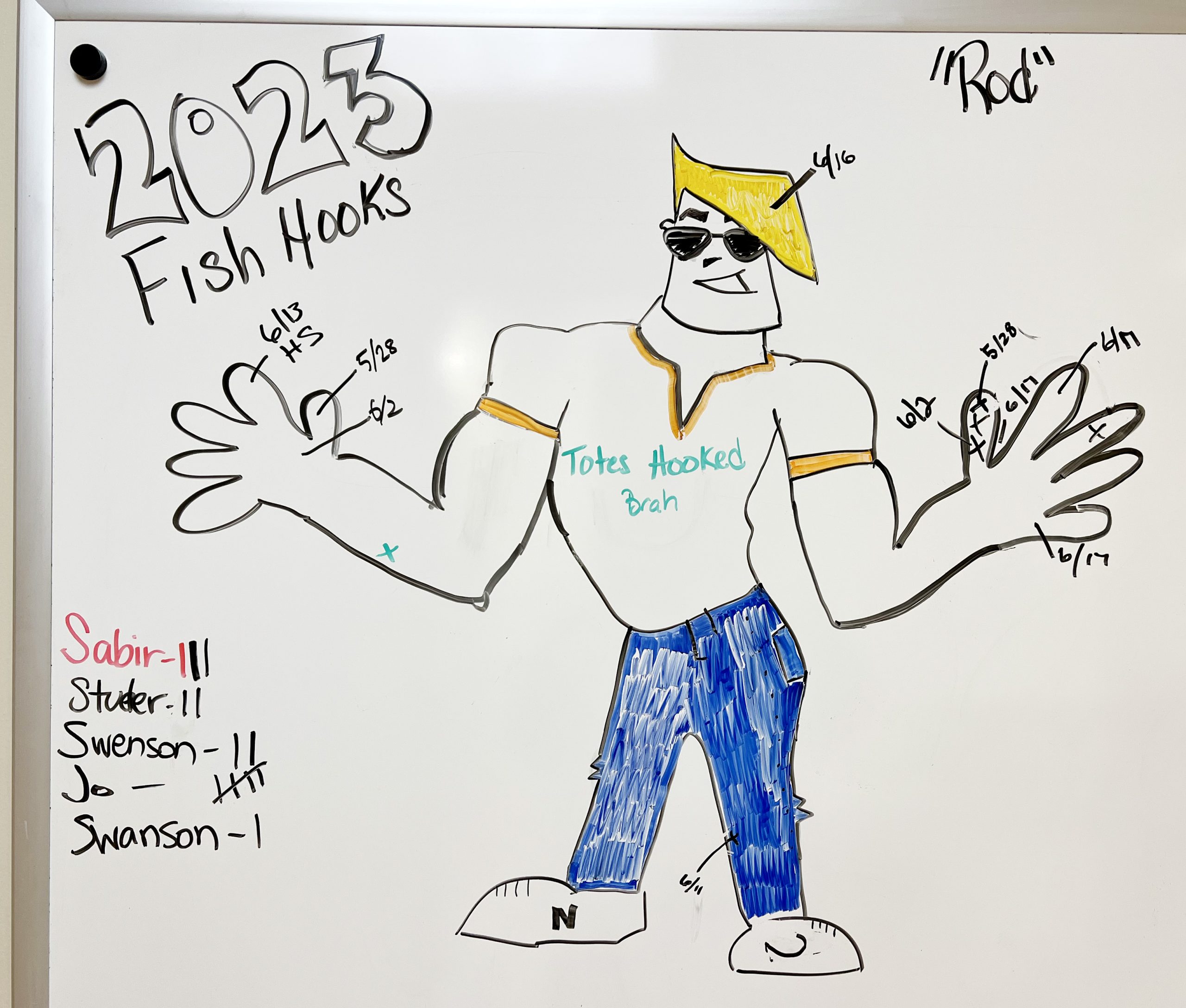
2023 Fish Hook Removal Tracking
Health risks
Tetanus is a big concern when dealing with fishhooks. Anticipate receiving a tetanus shot if you are not currently up to date.
My advice
Take advantage of Minnesota summers. Fishing is one of the many fun opportunities of living in lakes country. However, if things do not go as planned and you end up with a fishhook injury, we are always here to help.

Jen Gietzen, Emergency Department Director




Leave A Comment